
Building Systems That Hold Under Pressure
There's a moment every engineering team eventually faces: the system that worked perfectly in every demo, every test, every staging environment, meets the real world, and the real world doesn't care about your assumptions.
For us at Nova X Solutions, that moment usually arrives at the worst possible time. A bill payment platform during a salary-day traffic spike. An insurance broker's claims portal at month-end. An NGO's donor system during a viral campaign. Pressure doesn't send a calendar invite. It just shows up, and the system either holds or it doesn't.
We've spent years building for sectors, fintech, insurance, energy, nonprofit, where "it mostly works" isn't an acceptable answer. Here's what we've learned about designing systems that hold.
Pressure reveals what testing can't
Every system looks resilient until it meets concurrency, scale, and real human behaviour at the same time. A payment flow that handles 50 test transactions cleanly can buckle at 5,000 simultaneous ones not because the code is wrong, but because the assumptions underneath it were never stress-tested. Database locks that seemed harmless become bottlenecks. A third-party API that responds in 200ms in the sandbox suddenly takes 8 seconds under load, and your whole request queue backs up behind it.
This is the gap between "functionally correct" and "production-ready." Closing it isn't about writing more code, it's about asking harder questions before the code is written: What happens when this call times out? What happens if two requests hit this record at once? What's our fallback when the upstream service is degraded, not down?
Design for the failure, not just the feature
The instinct when building something new is to focus entirely on the happy path — the clean, intended flow from request to success. But systems that hold under pressure are designed with just as much attention to the unhappy paths: partial failures, duplicate submissions, expired sessions, network drops mid-transaction.
On Standard Bills, our bill payment platform, this isn't theoretical, it's the daily reality of processing a high volume of transactions where money is actually moving. A payment that fails silently, double-charges a user, or leaves a transaction in limbo isn't a bug report, it's broken trust. So idempotency, single-tab session enforcement, input sanitization, and clear transaction-state handling aren't nice-to-haves bolted on later. They're load-bearing parts of the architecture from day one.
Resilience is an architectural decision, not a patch
We've found that the systems most likely to hold under pressure share a few traits, regardless of industry:
Clear boundaries. Whether it's separating a CMS from a CRM in a modular monolith, or isolating a payment engine from a notification service, well-defined boundaries mean a failure in one area doesn't cascade into everything else.
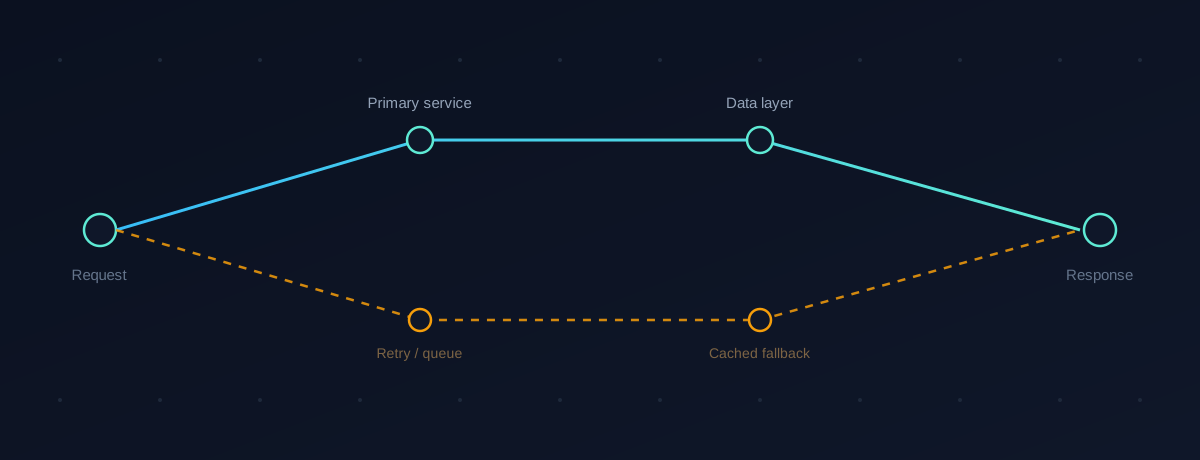
Sensible defaults under uncertainty. When a dependency is slow or unavailable, the system should degrade gracefully, show stale data, queue the request, retry intelligently, rather than fail outright.
Observability before optimisation. You can't harden what you can't see. Logging, monitoring, and clear error states matter more in the first version than premature performance tuning.
Security as a structural layer. Hardening, input validation, session integrity, sanitisation, has to be part of the foundation, not a final checklist item before launch.
None of this is exotic. It's discipline applied consistently, especially in the parts of the system nobody enjoys building.
Why this matters more for the sectors we serve
A marketing site that goes down for ten minutes is an inconvenience. A claims system that goes down during a payout cycle, or a donation platform that fails during a fundraising push, has real consequences for real people. The organisations we build for, insurance brokers, fintech platforms, mission-driven nonprofits, energy companies, operate where downtime and data errors carry weight beyond inconvenience.
That's the lens we build through at Nova X Solutions; not "does this work," but "does this hold when it matters most." It shapes how we architect backend systems, how we structure data layers, and how we think about scale long before a client asks us to.
Holding under pressure is a design philosophy, not a milestone
Resilience isn't something you finish. It's a posture you maintain revisited every time you add a feature, onboard more users, or expand into a new market. The systems that last are the ones built by teams who keep asking "what happens when this breaks" long after launch day.
That's the standard we hold ourselves to on every build, whether it's a 25-screen fintech rebuild, a SaaS platform processing customer data, or a brand-new client's first production system. Pressure is inevitable. Failure under it shouldn't be.
Nova X Solutions builds integrated digital ecosystems for businesses across fintech, healthtech, insurance, energy, and beyond. Learn more at novaxhq.com.
Keep reading
The Infrastructural Decision Every Business Should Make Early
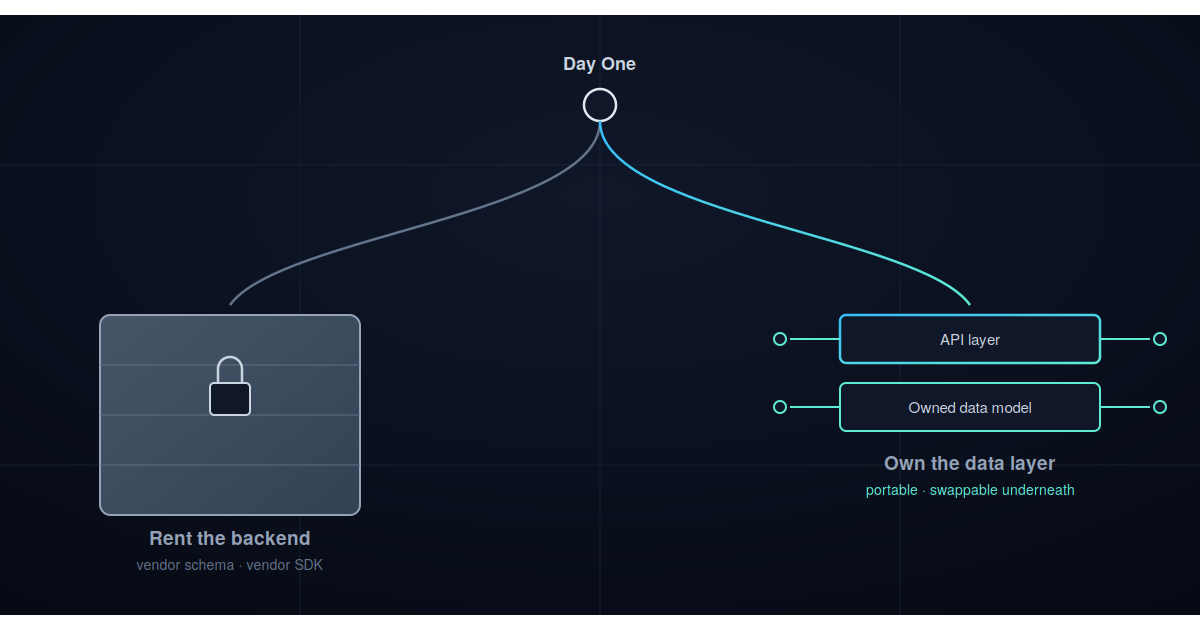
Every growing business eventually hits the same fork: own your data and API layer, or keep renting it. Here's why this decision should be made on purpose, not by default.
Read article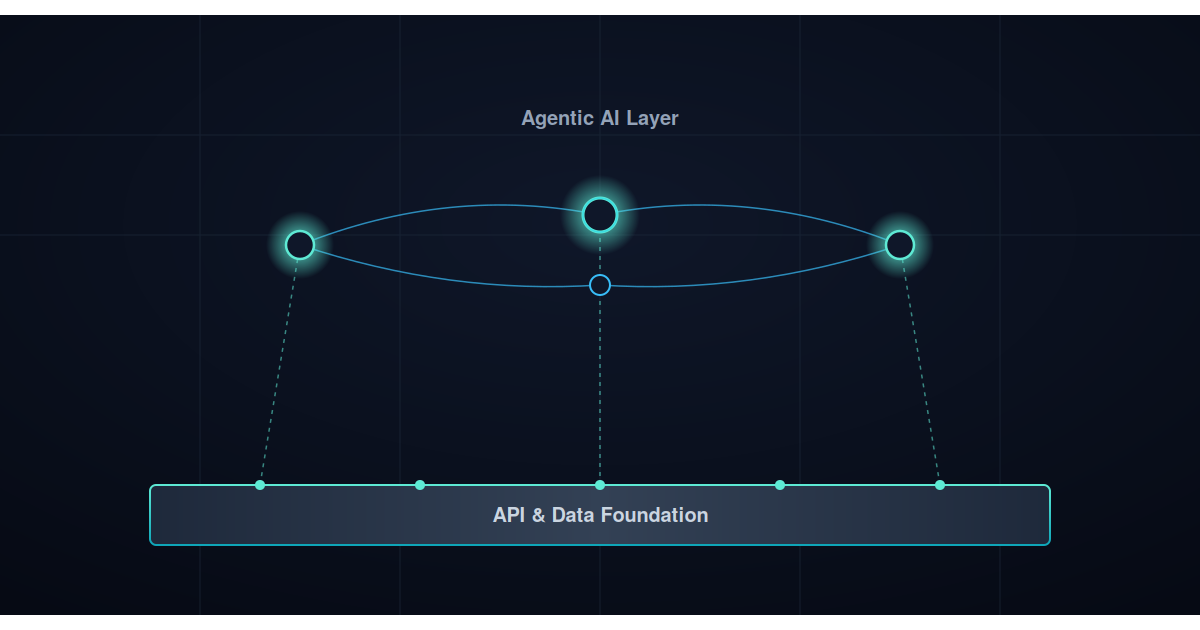
The Agentic AI Gap: Why the Infrastructure Matters More Than the Model
Agentic AI adoption is surging globally and across Nigeria, but most enterprise systems aren't built to use it. Here's what actually needs to come first.
Read article