
Understanding the Digital Business Ecosystem: A Complete Guide

"Ecosystem" has become one of those words that shows up in every pitch deck and means almost nothing by the third use. Vendors call a single dashboard an ecosystem. A founder calls four unrelated apps an ecosystem because they all live in the same Google Workspace. The word has been stretched thin enough that it's worth pausing to ask what it actually describes.
For us at Nova X Solutions, the distinction isn't academic. It's the difference between a business that can see itself clearly and one that's piecing its own picture together from five disconnected screens. We design these systems for a living, so this guide is the explanation we find ourselves giving clients before any build begins: what a digital business ecosystem really is, how it differs from a pile of software, and why the businesses that get this right tend to pull ahead of the ones that don't.
What a digital business ecosystem actually is
A digital business ecosystem is a connected set of systems, data, and automated processes that work together as one operating environment, rather than as separate applications a person has to manually bridge. The defining feature isn't how many tools are involved. It's whether those tools share data and trigger actions across each other without a human acting as the connector.
<div class="blog-cta-contact"><h4>Fuel Customer Engagement with Intutive Mobile Apps Let Us Help You Select the Right Mobile App Technology Stack</h4><p><a class="contact-popup blog-cta-contact-btn pum-trigger" href="#" style="cursor: pointer;"> Discuss Your Project Now! </a></p></div>In a real ecosystem, a new customer signing up doesn't just create a record in one system. It can simultaneously provision an account, fire a welcome sequence, update a sales pipeline, and adjust a billing schedule, because the underlying systems are wired to recognise and act on the same event. No one re-keys that customer into four different tools. The event happens once, and the ecosystem propagates it.
This is the part most "ecosystem" claims skip past. A shared login and a shared brand colour palette don't make a set of tools an ecosystem. Shared data and shared triggers do.
How this differs from a stack of tools
Most businesses don't choose fragmentation on purpose. It accumulates. A CRM gets adopted to manage leads. An accounting tool gets added when the spreadsheets stop scaling. A support desk app comes in when email stops being manageable. Each decision made sense in isolation. None of them were made with the others in mind.
The result is a tool stack: a collection of software that each does its job competently but has no idea the others exist. Data about the same customer lives in four places, often slightly out of sync with itself. Every process that crosses a system boundary, closing a sale, resolving a support ticket, reconciling a payment, depends on someone manually carrying information from one tool to the next.
A digital business ecosystem inverts that relationship. Instead of asking "which tool handles this function," it starts with "what should happen, end to end, when this event occurs" and then designs the systems and integrations to make that happen automatically. The tools still exist. What's different is that they're built or connected to operate as a single coordinated system rather than a row of independent silos.
The components that make an ecosystem work
Four layers tend to show up in every functioning digital business ecosystem, regardless of industry:
APIs. The connective tissue between systems. An API is what lets a payment platform tell an accounting system a transaction happened, or lets a CRM hand a new lead to a marketing tool, without a person copying anything by hand. Without well-designed APIs, "integration" usually means exporting a spreadsheet from one tool and importing it into another.
Automation layers. The rules that decide what happens next once an event occurs, without waiting for someone to trigger it. A new order automatically updates inventory, triggers a fulfilment workflow, and schedules a follow-up, not because a person remembered all three steps, but because the system is built to execute them.
Data flows. The pathways that keep information consistent across the whole environment. A data flow is what guarantees that a customer's address, updated once, is correct everywhere it's used, instead of correct in one system and stale in three others. This is usually the least visible layer and the one whose absence causes the most damage.
Integrated platforms. The systems themselves, CRM, billing, support, analytics designed or configured to expose their data and accept instructions from the rest of the environment, rather than operating as closed boxes that only a human can read from and write to.
None of these four layers is sufficient on its own. APIs without automation just move data faster between manual steps. Automation without clean data flows automates on top of inconsistent information. The ecosystem is what you get when all four are designed together, with a clear picture of how information should move through the business before any single tool is chosen.
Why connected businesses outperform disconnected ones
The advantage isn't abstract. It shows up in specific, measurable ways.
Decisions get made on real-time data instead of last week's export. When systems share data automatically, a founder or operations lead can see an accurate picture of the business right now, not after someone spends a day reconciling four spreadsheets. That speed compounds, faster decisions, caught earlier, in a market that doesn't wait.
Customer experience stops depending on which system someone happens to be looking at. A support agent who can see a customer's full history orders, payments, prior tickets resolves issues faster and with fewer apologies. A customer who gets a consistent answer regardless of which channel they used trusts the business more, not because the business tried harder, but because the systems behind it actually agree with each other.
Growth doesn't multiply the operational headcount needed to support it. In a tool-stack business, doubling transaction volume often means doubling the manual reconciliation work behind the scenes. In a connected ecosystem, the automation layer absorbs most of that load, so growth adds revenue without adding a proportional amount of administrative drag.
Errors get caught at the source instead of three systems downstream. When data flows automatically and consistently, a mistake is far more visible immediately, and far less likely to quietly propagate into four other places before anyone notices.
None of this requires a business to be large. It requires the underlying systems to be designed to work together, which is a decision available to a ten-person company just as much as a two-hundred-person one.
What this looks like in practice
This is where most businesses get stuck, not because the idea is unclear, but because the path from "five disconnected tools" to "connected ecosystem" looks like it requires throwing everything out and starting over. It usually doesn't.
At Nova X Solutions, the systems we design for clients across various industries are built around this principle from the start: a connected operational ecosystem, not a collection of point solutions. That means mapping how data and events should move through a business before recommending a single platform, building the API and automation layer that lets existing systems talk to each other where that's the right call, and replacing only the parts that genuinely can't be integrated. The goal in every engagement is the same, a business that operates as one coordinated system, whether that system has three components or fifteen.
An ecosystem is a design decision, not a feature you buy
No vendor sells "a digital business ecosystem" off the shelf, because it isn't a product. It's the outcome of deliberately designing how a business's systems, data, and automation work together, instead of letting that structure accumulate by accident one software purchase at a time.
The businesses that get this right aren't necessarily the ones spending the most on technology. They're the ones who asked, early, what should happen automatically when something occurs in their business and built toward that answer deliberately, one connected layer at a time.
Nova X Solutions designs and builds connected operational ecosystems the APIs, automation, and data layers that let scaling businesses run as one coordinated system instead of a stack of disconnected tools. Learn more at novaxhq.com.
Keep reading
Why Business Software Integration Fails for Nigerian Companies
The forex problem is a symptom of a deeper one: most of these tools weren't designed with the Nigerian operating environment in view, and it shows beyond the price tag.
Read article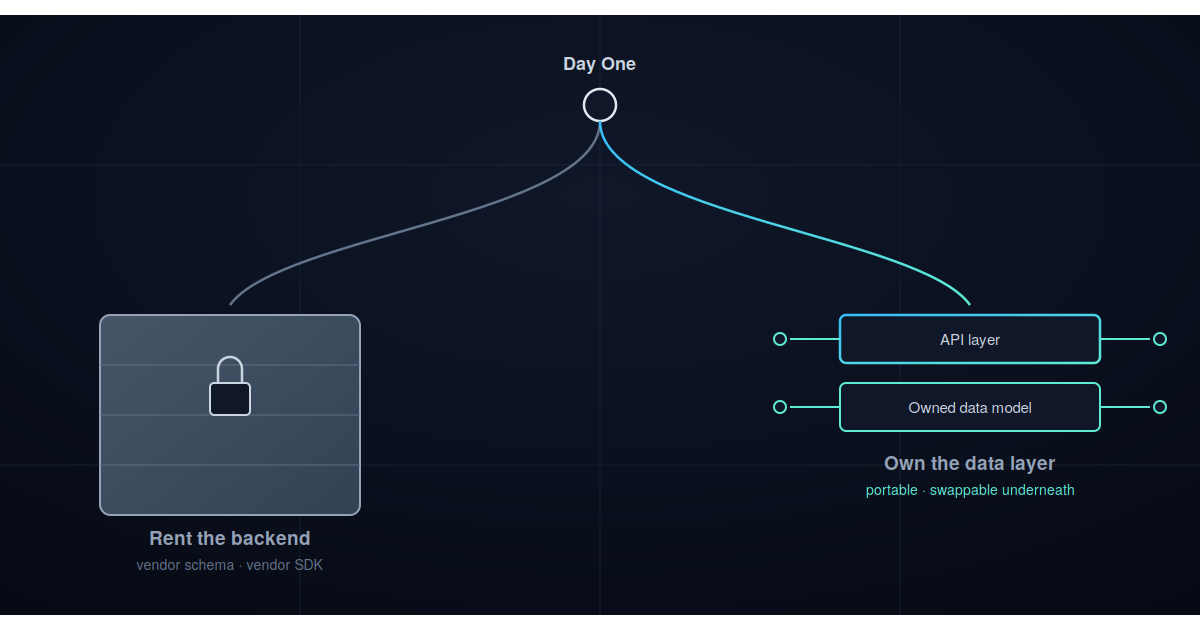
The Infrastructural Decision Every Business Should Make Early
Every growing business eventually hits the same fork: own your data and API layer, or keep renting it. Here's why this decision should be made on purpose, not by default.
Read article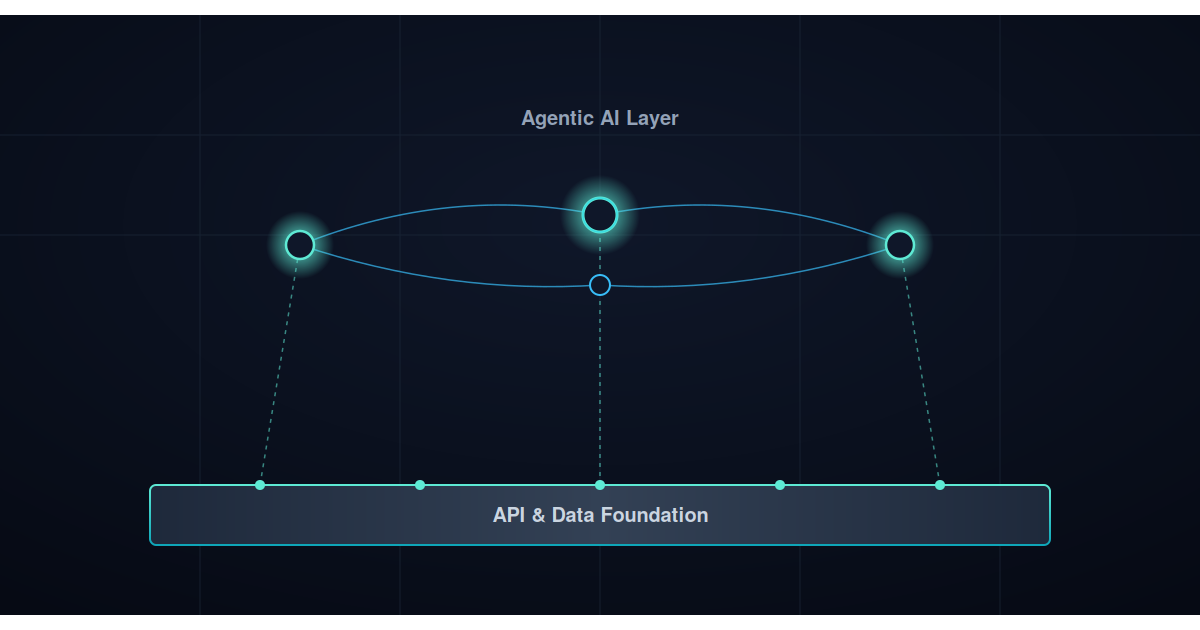
The Agentic AI Gap: Why the Infrastructure Matters More Than the Model
Agentic AI adoption is surging globally and across Nigeria, but most enterprise systems aren't built to use it. Here's what actually needs to come first.
Read article